

 Kontakte

ANDEAN STUDIES
ONLINE PROGRAMS
Our Andean Studies department offers learning programs in the following disciplines: textile art, Andean music, musicology, and Quechua language. An important aspect of our methodology is adopting the Andean “place of enunciation” as our guiding principle. Classes are taught via live videoconference using the Zoom platform. Each session is recorded, allowing an asynchronous participation in the program. Sessions are spoken in spanish.
ANDEAN TEXTILE ART
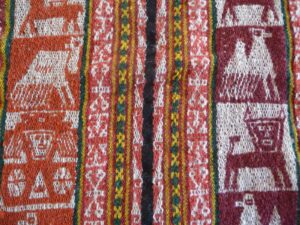
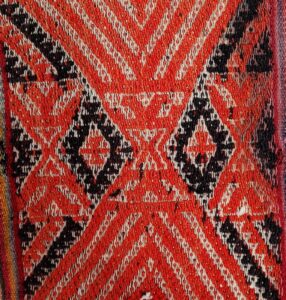
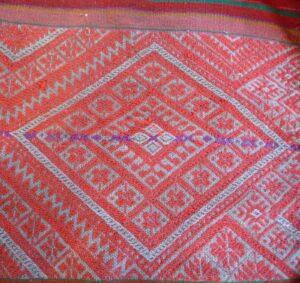
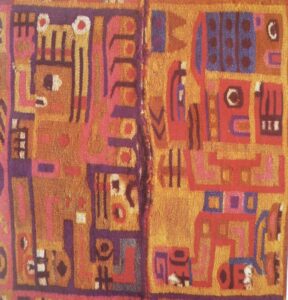
Introduction to semiotics of Andean textilesThis program addresses the analysis of the textile corpus, aspects of the weaving process, chromaticism, and the spacial organization of a woven piece. Particular attention will be paid to the pallay iconographic segments. Theoretical tools and methodologies will be provided for a proper understanding of Andean textiles within their cultural context. Start date: march 5th / 4 weeks / 8 hours
Fundamentals of Andean cosmology based on Iconography and MythsThe program content is divided into the following modules: the ontologies of animism and analogism; the origin of the phenomenon; and Andean relational ontology. Drawing on anthropology, semiotics, and other disciplines, this program offers a solid understanding of Andean ontology. The hermeneutic analysis of archaeological iconographic designs and that of contemporary textiles, as well as living mythical discourses, will form the basis of the program. Start date: april 8th / 4 weeks / 8 hours
Semiotics of Pallay DesignsThe pallay segment is the most complex area of a textile piece, as it is characterized by being covered in iconography. The following topics will be addressed: the pallay and its communicative character, its relationship with ethos, the aesthetic values of the pallay complex, its construction and modelling. Multiple pallay segments corresponding to diverse textile styles will be examined. Start date: may 13th / 2 weeks / 4 hours
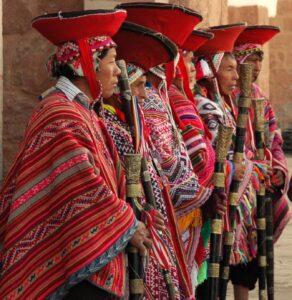
Textiles and Andean Cosmopolitics: An interpretation of the Clothing of the Varayoq mayorsThe varayoq mayors are a body of authorities still active in many Quechua communities. Due to their relational carácter, this political culture can be approached through the notion of cosmopolitics. From a case study and its context of enunciation, this seminar examines the garment and other emblems of power worn by the varayoq authorities. From a multidisciplinary perspective, this program offers learning not only about textile culture but also about the model and characteristics of relational political thought specific to the Andes. Start date: june 3rd / 2 weeks / 4 hours
Astronomy and cosmology in archaelogical textilesWe´ll examine the language, symbolism and iconography of the invisible world and how to make visible what cannot be seen. Part of the learning process is the transmission of agricultural and astronomical knowledge through ritual calendars, represented in textiles, ceramics, sculptures and goldsmith work. This way, we´ll discover the patterns and schemes pre-Columbians developed in their designs, to visualize the order of time and space. Concerning astronomy, we´ll discover in their textiles, how these teach us the numbers of the days and those of the planets´ sidereal and synodic years, but also the great art of turning more complex time periods and cycles into zoomorphic and anthropomorphic shapes, while giving visible appearances to what the human eye cannot see, but which is a great astronomical knowledge the human being can learn and put into application. Start date: august 3 /2 weeks / 4 hours |
ANDEAN MUSIC
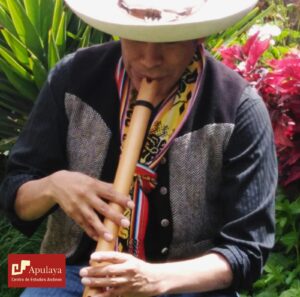
Individual quena lessonsThis course offers the improvement of musical skills and competencies in playing the quena flute. You will gradually be trained in the interpretation of the diversity of Andean and Latin American musical genres. Methodology: We base our approach on a dialogue between conventional academic methodologies and the teaching and learning strategies inherent in oral traditions.
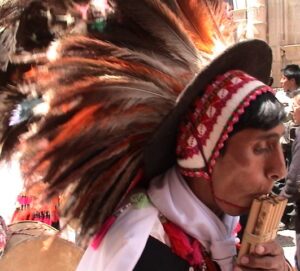
Fundamentals of andean music from a musicological perspectiveAndean musical culture is the product of a millennia-long civilizational development. Consequently, it possesses its own normative system and theory. This program is aimed at musicians, social scientists, teachers, researchers, and other interested parties. It provides tools approaching Andean music from an interdisciplinary perspective. Start date: … 20 academic sessions |
QUECHUA LANGUAGE
Individual lessonsThis program offers the achievement of verbal fluency, combined with mastery of grammar and literacy. We have our own teaching strategies and methods. In terms of “place of enunciation”, our sessions includes relevant cultural aspects transmitted by the Quechua speaker through the language. Levels: basic, intermediate, and advanced. |

|
|